Albinism: The Achromatic Ailment
Peering into the biology behind albinism, its variations, as well as the people and social issues it may cause.

When you hear the word ‘albinism’, what comes to mind? For many, it would be the colour white, owing to its Latin origin. While this is the overwhelming characteristic, albinism is more specifically defined as a disorder involving melanin production or distribution as well as optic nerve development. It’s most commonly categorised by pale skin and hair and various eye colours.
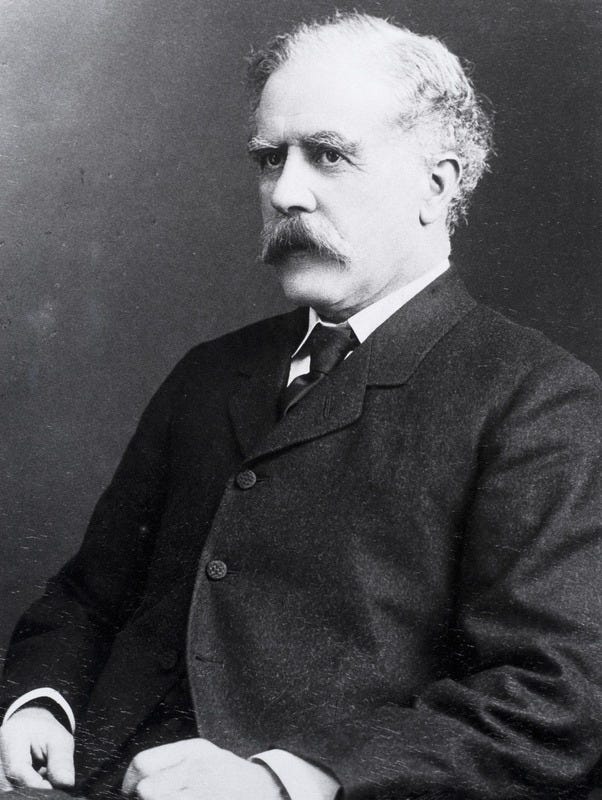
Sir Archibald Edward Garrod was the first to classify the disorder. In 1908, he identified it in his ‘Inborn errors of metabolism’, recognising the genetic origin of the disorder as well as discovering the recessive behaviour of the trait, drawing from Mendel’s laws of inheritance that was coincidentally rediscovered in 1900. Although we’ll focus on albinism in humans for the purpose of this post, it’s important to note the presence of albinism in other species. In particular, albino rats and other animals used in laboratories for studies in various fields such as biomedicine and toxicology. Although the animal tested does not have to be albino (as this depends on the purpose of the experiment or what it aims to observe in particular), they may be preferred for various reasons, such as ease of finding veins for injections or increased homozygosity due to extensive inbreeding.
Analysis — The Genetics
We’ve established that albinism is characterised by insufficient production of melanin (or none at all), but why does this matter? Well, melanin is the substance which determines the colour of the skin, hair, and eyes, based on its type and amount in the body. Furthermore, disproportionate production also impairs vision due to the importance of melanin in eye development and function.
Albinism is far from uniform. It can be seen in a multitude of ways among those who have it, for example, some people may have skin that is significantly lighter than that of their relatives, while for some, the difference may not be as dramatic. It is also worth noting that the disorder does not result in a linear, unchanging appearance: it is possible that, with time and age, melanin production may show an increase leading to darkening of the skin and hair.
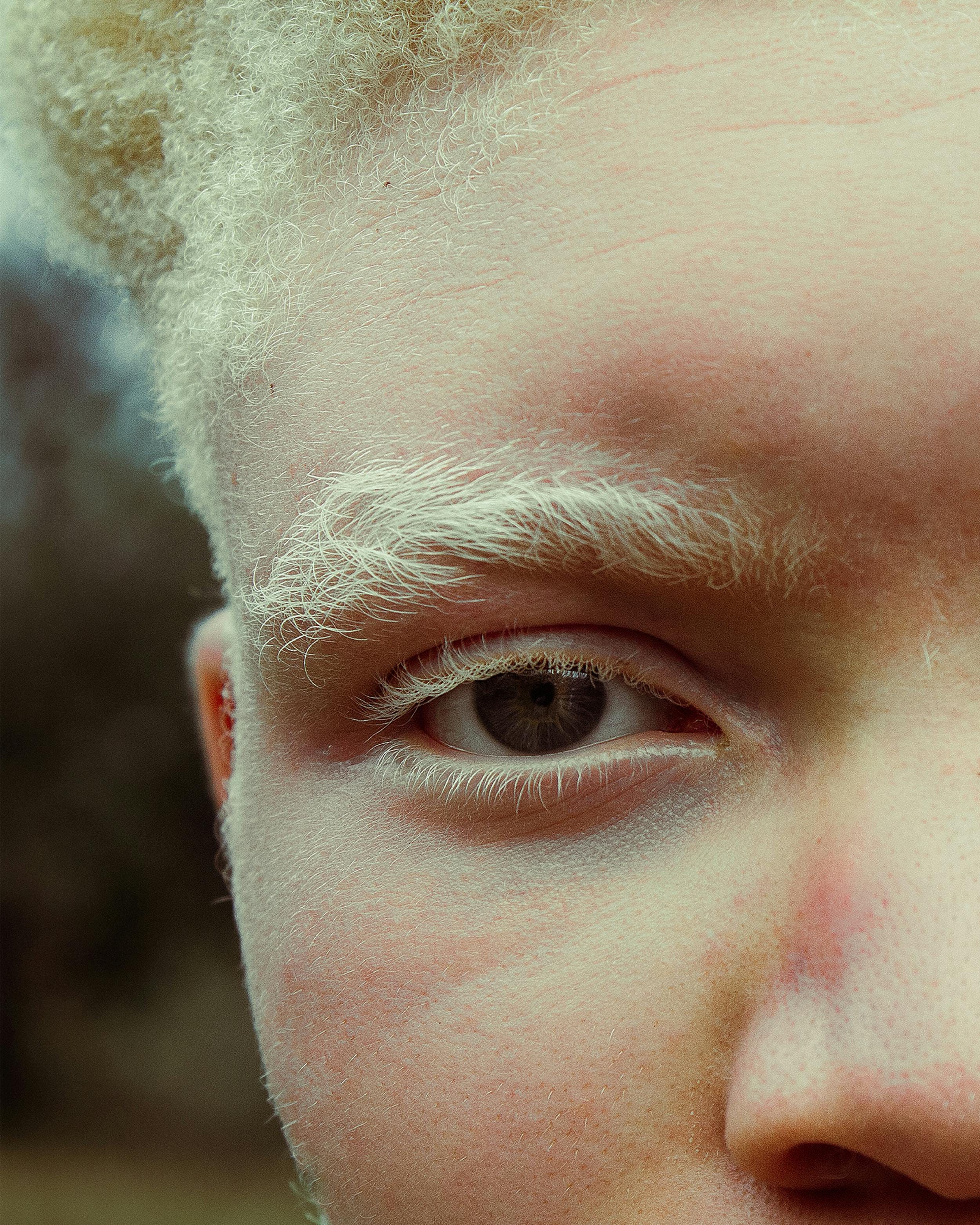
As mentioned, albinism is primarily an autosomal recessive trait (except OA1, which is X-linked recessive), thus it is inheritable.
Psst! Check out the basics of how genes work here!
Contrary to popular belief, albinism is not a singular condition, but rather, it encompasses an array of genetic conditions. The main two variations are Oculocutaneous Albinism (OCA) and Ocular Albinism (OA). OCA is more common, affecting the skin, hair, and eyes, while OA affects the eyes only. Among these two types also reside further variations (such as OCA1, OCA2, and so on). Beyond these 2 main types, there are also other genetic disorders of which albinism is a feature, albeit rare. Some examples of this phenomenon would be Hermansky-Pudlak Syndrome and Chediak-Higashi Syndrome.
Despite its rarity, albinism has become well-known due to the physical, often perceived as ‘majestic’, appearance of those who have it. However, the disorder is much more than that – with it comes physical ailments and discrimination. Often, albinism leads to impaired vision and nystagmus (involuntary movement of the eyes) and a high risk of skin cancer due to photophobia (sensitivity to light).
The People: Celebrities and Social Issues
Anyone who looks different is inevitably subject to differential treatment, a lifetime of stares and double-takes, as well as possible ridicule or difficulties integrating into society.
I heard another model say “Oh her? She’s only here because of her white skin and white hair, that’s all.”
I thought to myself “Well, why does she think she’s here? Surely, it’s because of her looks, and I’m here for my looks!”
~ Connie Chiu in her TEDx Talk
With albinism, this effect may be understated as many believe their ‘otherworldly’ appearance is breath-taking – I believe this is greatly attributed to shifting beauty standards in recent decades, where ‘different’ is encouraged and diversity is celebrated. As a result, there are now models such as Connie Chiu (dubbed the ‘world’s first fashion model with albinism’) who have broken the boundaries of conventional beauty! Other notable figures with albinism are Jonny and Edgar Winter, brothers who made history with their success as musicians!
Each view means the world to me, thanks for reading! To learn about biology and discover optimistic biotech, subscribe to my publication and remember to stay curious!
love this!!